Solar Panel Installation Moldova
Turnkey solar panel installation in Chișinău and across Moldova: a 5 kW on-grid system costs around 3,800 EUR, and fitting takes 1-2 days.
Call nowYou find out the exact price after a site visit, before signing the contract.
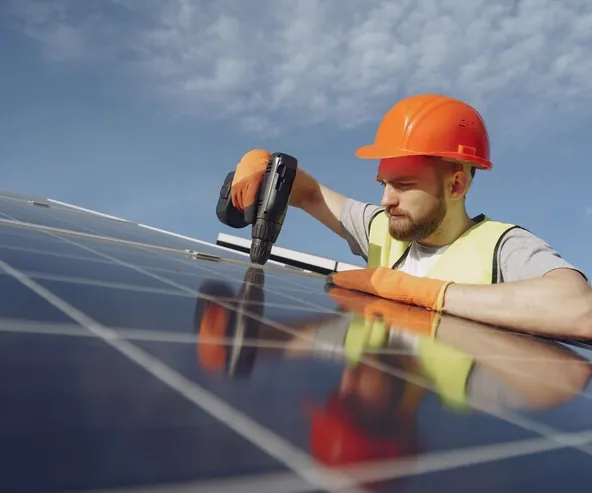
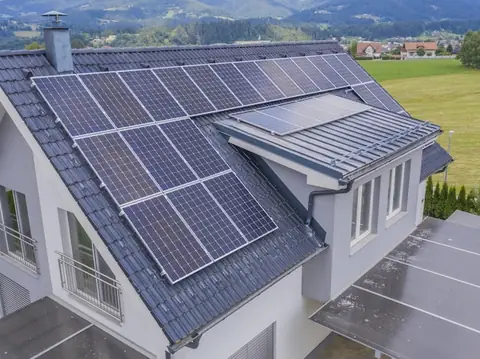
Turnkey solar panel installation in Chișinău
Solar panels turn light into direct current, and the inverter turns it into the 230 V alternating current that comes out of the sockets in your home. Installing them means fitting the modules on the roof or on a ground structure, connecting them to the inverter, and hooking up to the grid, so the surplus produced in summer is credited to your account through net billing.
We do turnkey solar panel installation in Chișinău, in the suburbs and in the districts. We come to the site, measure the roof, design the system based on your consumption from your bills, and submit the whole connection application to Premier Energy Distribution or RED Nord. A 5 kW on-grid system costs around 3,800 EUR; a hybrid one, with batteries for power cuts, around 5,600 EUR.
Typical equipment: inverters such as Sungrow, Huawei or Deye, and N-Type panels from major manufacturers such as Jinko or Trina, so the efficiency holds up even after 20 years.
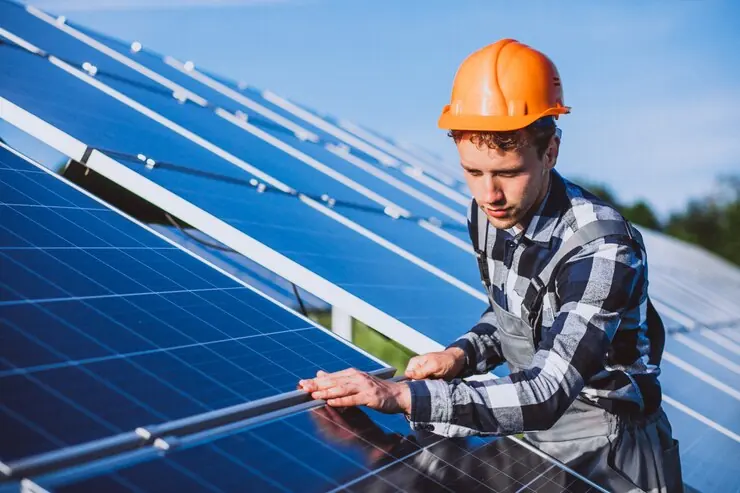
How much do turnkey solar panels cost?
In Moldova, a turnkey on-grid system costs between 650 and 800 EUR per installed kW: up to 10 kW, the bigger the system, the cheaper it comes out per kW. A 5 kW system, which is what a house consuming 500 kWh a month needs, costs around 3,800 EUR, or roughly 75,000 MDL at the day's exchange rate. A hybrid system costs extra for the hybrid inverter, around 500-600 EUR at 5 kW and 1,000 EUR at 10 kW, and for the batteries, around 1,200 EUR for every 5 kWh.
Prices valid from September 2026. You get the exact quote after a site visit.
5 kW on-grid
For consumption of 400-550 kWh a month.
- On-grid inverter, such as Sungrow or Huawei
- 9-10 N-Type TOPCon panels, such as Jinko or Trina
- Aluminium structure, such as K2 Systems
- Around 26 m² of roof
- Connection paperwork included
10 kW hybrid
For 800-1,100 kWh a month and houses where the power still gets cut.
- 10 kW hybrid inverter, such as Deye or Sungrow
- 10 kWh LiFePO4 batteries
- The house keeps power when the grid goes down
- 18-19 N-Type panels of 550 W
- Output on your phone, over Wi-Fi
15 kW three-phase on-grid
For 1,200-1,600 kWh a month: a house with a heat pump, or a small business.
- Three-phase inverter, such as Sungrow or Huawei
- 27-28 panels, bifacial on request
- Aluminium or galvanised steel structure
- Help with the increased-power application
- Around 72 m² of roof or land
Prices by power, from 5 to 30 kW
| Power | 550 W Panels | Area | Turnkey On-Grid |
|---|---|---|---|
| 5 kW | 9-10 | ~26 m² | ~3,800 EUR |
| 10 kW | 18-19 | ~50 m² | ~6,500 EUR |
| 15 kW | 27-28 | ~72 m² | ~9,750 EUR |
| 20 kW | 36-37 | ~95 m² | ~13,000 EUR |
| 30 kW | 55 | ~140 m² | ~19,500 EUR |
Hybrid: 5 kW with a 5 kWh battery costs around 5,600 EUR, 10 kW with 10 kWh around 9,800 EUR. Above 10 kW, the hybrid quote is worked out from your consumption and how many hours you want to keep the house running on batteries.
What's included in the price and what's paid separately
The price includes the panels, the inverter, the structure, the solar cables, the DC and AC protection, the fitting, the design and the connection paperwork up to commissioning. Paid separately are the batteries, a ground structure, which needs piles or a foundation and buried cable, and changing the connection if the contracted power is lower than the system's: usually around 500 EUR.
What power do you need?
Add up your consumption from the last 12 months' bills, in kWh, and divide by 1,200: the result is the power in kW. At 500 kWh a month, that's 6,000 kWh a year, meaning a 5 kW system. Two limits matter: the installed power can't exceed the power contracted with the supplier, and net billing only pays for energy fed into the grid up to your individual cap, set in the contract with the supplier. An oversized system doesn't bring in extra money.
How many solar panels are needed for 5 kW?
Nine or ten panels of 540-550 W, meaning around 26 m² of roof facing south, south-east or south-west. With 450 W panels, that comes to 11-12 units. A 5 kW system produces around 6,000 kWh a year in Moldova: 700-800 kWh in July, around 150-250 kWh in December.
Which solar panels are better?
For a house in Moldova, monocrystalline N-Type (TOPCon) panels of 540-600 W from major manufacturers such as Jinko, Longi or Trina. Compared with the older PERC panels, they lose less power per year, around 0.4% versus 0.55%, and cope better with July's heat. Bifacial panels are worth it on the ground, where they also catch light reflected off the ground; on a roof the difference is small. The inverter matters just as much: one with an app, such as Huawei, Sungrow or Deye, shows you on your phone how much it produced each day.
5 kW solar panel kit: fitting only
If you've already bought the kit, we do only the fitting and the paperwork. In Chișinău, labour for fitting a kit brought by the customer costs around 3,000 MDL per kW, so around 15,000 MDL for 5 kW. Before we come, we check against the equipment list that the inverter, the protection and the structure match your roof and your contracted power.
Net billing and subsidies for solar panels in Moldova
From net metering to net billing
Since 1 January 2024, new systems go onto net billing, which replaced net metering. The energy your panels send into the grid is no longer "stored": the supplier credits you its cash equivalent, and that amount covers your following bills. If a balance remains, you can ask for it to be paid out once a year.
The conditions: the system can't exceed the power contracted with the supplier and must be no more than 200 kW. You sign the net billing contract with the supplier, Premier Energy or FEE Nord, and the connection is approved by the network operator, Premier Energy Distribution or RED Nord.
What this means for you: the surplus is only paid within your individual cap, set in the contract with the supplier. That's why we size the system to your bills, not to how much room there is on the roof, and orient the panels so as much energy as possible is used directly in the house.
Subsidies for solar panels: the Casa Verde programme
For private houses, the state gives grants through the Casa Verde product of the Residential Energy Efficiency Fund (FEERM), managed by the National Sustainable Energy Centre. The grant is 50% of the eligible investment, but no more than 200,000 MDL per beneficiary, for individual houses registered in the real estate register or with the local council, including houses under construction.
The condition that trips many people up: panels are only funded together with storage batteries, and only in one of three combinations: alongside a heat pump, if you already have a heat pump, or if you have a 100% electric car. The application is submitted online, on the FEERM platform, and the programme is announced for the period 1 July 2025 - 31 December 2027.
Check the amounts and conditions at cned.gov.md before signing the contract. For the application, we give you a detailed quote broken down by equipment and work.
How the installation goes, step by step
Paperwork stops a lot of people. We've organised the work so the only time you need to show up is to sign the documents.
Visit and Measurements On site
We come to your house in Chișinău, Stăuceni, Dumbrava, Ialoveni or another village nearby. We measure the roof, check the rafters and the roofing, see what shade the trees and neighbouring houses cast, and look over the past year's bills.
Solar Panel Design and Contract Fixed price
We draw up the panel layout and the single-line electrical diagram, choose the inverter based on your contracted power, and sign the contract. The price in the contract doesn't change during the work.
Connection Approval Usually 3-4 weeks
We submit the application to the network operator: Premier Energy Distribution in the centre and south, RED Nord in the north. Without this approval, the system can't legally be connected to the grid. The timeframe depends on the operator and how complete the application is.
Fitting 1-2 working days
We come with all the materials. We fix the structure, fit the panels, run the solar cable through conduit to the inverter, and connect the inverter to the house's board. We don't leave offcuts of cable lying around your garden when we go.
Commissioning The final paperwork
We measure the earthing, carry out the tests with the lab, and submit the final documents. The operator checks or replaces the meter, so it also registers the energy sent into the grid, and you sign the net billing contract with the supplier. From then on, you see your output every day on your phone.
Roof or ground? Where panels get fitted
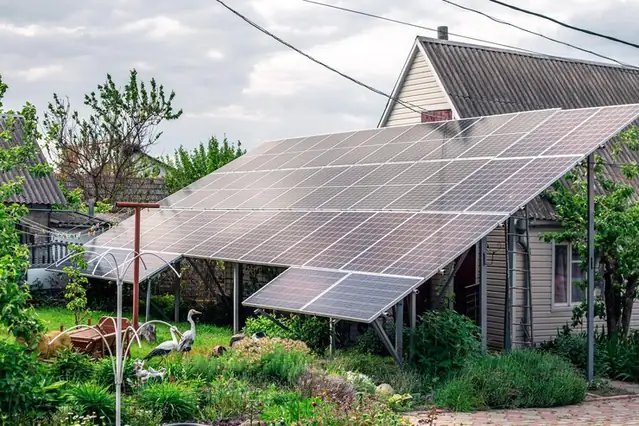
A roof works out cheapest: the structure fixes to the rafters or straight to the roofing, and the cable to the inverter is short. The ground is worth it when the roof is small, shaded or north-facing and you have a clear yard facing south. It costs more, because the structure needs piles or a foundation and buried cable.
What position are solar panels fitted in?
Ideally facing south, at 30-35 degrees to the horizontal, about what an ordinary pitched roof has. An east-west orientation loses around 15-20% of the annual output, but spreads production over the morning and evening, when the family is actually using power. On flat roofs we fit tilted structures, held down with ballast or anchors.
What we usually find around Chișinău
- Dumbrava, Trușeni, Stăuceni, Bubuieci: large houses with corrugated sheet or metal tile roofs, to which the structure fixes quickly. Where the power still gets cut, a hybrid system is worth it.
- Durlești, Codru, Ialoveni: where the houses stand close together, we check the neighbours' shade at different times of day before choosing where to put the panels.
- Centru, Buiucani and the other sectors: blocks and buildings in the sectors usually have flat roofs, on which we fit tilted structures.
- The rest of Moldova, from Bălți to Cahul: we schedule the visit once you send us your bills and a photo of the roof.
Frequently asked questions
Do solar panels produce power in winter in Moldova too?
How long does it take to recoup the investment?
Are there state subsidies for solar panels?
If the grid loses power, does my on-grid system still work?
Leave a request
The request form will be working soon.
The data is processed in line with the privacy policy.